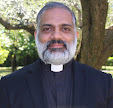
Marriage of Catholics with the people of other Religion
In my personal experience as a pastor for last 14 years and as a judicial vicar who judges the marriage cases in the tribunal, I have two points to defend strongly.
(1) I very strongly feel that religion and same faith is to be a main factor for a believer while getting married.
(2) I have found cases miserably failed love marriages where the only pillar to support the marriage is love where religion was not at all a point.
Now a days, the youngsters fall in love like that. They insist for marriage only because they have fallen in love. There is only emotion involved and the reason has no place there. I do not claim that all such cases are failures. But proportionately, the failure rate is high there.
On the other hand if you are sure that you can not love the person whom you are going to marry, then do not marry that person. Let there be love even in all arranged marriages. Let no one marry, only because they fell in love but no other aspect is matching.
The marriage is not for happiness and understanding only. One can not sideline the aim of the marriage as per catholic understanding.
General Observation:
1. I cannot imagine of a Catholic partner getting married to a non-baptized who is never able to pray to the Trinitarian God together or not able to go to the Church together.
2. It makes me sad to see the children born for them are not able to see the parents who are praying together, do not have any family prayer; fight on the baptism and Catholic upbringing.
3. It is discouraging to see the couple comes to fight on getting married both in the Church and in the temple to satisfy everyone. Where one party insist on a Thali with a cross where the other party is not ready for that. Where the solemn oath cannot taken touching on Bible, etc, etc.
Justifying love marriages we say it just happened to fall in love. I am certain that even in falling in love you have selection. For eg: you still consider the age, gender, external beauty, character, smartness and any many other qualities in falling in love. Now my question is why do not we consider religiosity is a serious matter in the selection?
God has given us the use of reason. Marriage is a an act of intellect and will. Emotions can not only be the driving forces to get married but also reason in the light of Divine providence.
Thursday, 7 January 2010


Catholics and Marriage between the people of other Religion
Fr. Xavier Khan Vattayil states:
What should be the stand of a child of God concerning mixed marriage?
1. Love those who belong to other religion like your own brother or sister. But do not choose anyone of them as your spouse.
2. Do not fall in love with people of other religion.
3. Do not encourage anyone towards mixed marriage. Try to dissuade them.
4 . Adopt the healthy approach recommended by the church with regard to marriage. The church does not advocate mixed marriage. Be aware of the teachings of the church regarding mixed marriages.
5. Inculcate in children the values and convictions related to this subject while bringing them up.
6. Incorporarate the stand of the church concerning mixed marriages in your teachings.
7. In case mixed marriage becomes inevitable in certain case, go ahead only if the partner is willing to accept Christian faith and become a member of the church. Also think whether your action will serve as a bad example to others.
Mathew 18:6 “If any of you put a stumbling block before one of these little ones who believe me, it would be better for you if a great millstone were fastened around your neck and you were drowned in the depth of the sea.”
What is wrong if I marry someone whom I like from other religion?
“We are allowed to do anything but not everything is good. We are allowed to do anything, but not everything is helpful.”(I Cor: 10:23)
“Those who fear God will seek the will of God” (Sirach: 2:16)
It is God’s will that we must seek and not ours.
Tuesday, 5 January 2010
CONFESSION (Prepared by some other author)
The precept to confess at least
once a year is a reminder to receive the sacrament of penance on a regular
basis. If no grave sin has been committed in that time, confession is not
necessary. However, frequent confession is of great value; it makes us more
deeply conformed to Christ and most submissive to the voice of the Spirit.
Reconciliation is a personal encounter with Jesus Christ represented by the
priest in the confessional. The penitent admits to God that he has sinned,
makes an act of sorrow, accepts a penance (prayers, acts of self-denial, or
works of service to others), and resolves to do better in the future.
The
first step is prayer and an examination of conscience
Examination of
Conscience
"A man ought to examine himself before he eats of the bread and
drinks of the cup"[1 Cor 11:27-29]
First Commandment
"I am the Lord your God.
You shall not have strange gods before Me." [Ex 20:2,3]
7 Did I doubt or deny
that God exists?
7 Did I refuse to believe what God as revealed to us?
7 Did
I believe in fortune telling, horoscopes, dreams, the occult, good-luck
charms, tarot cards, palmistry, Ouija boards, seances, reincarnation?
7 Did I
deny that I was Christian?
7 Did I leave the Christian Faith?
7 Did I give
time to God each day in prayer?
7 Did I love God with my whole heart?
7 Did
I despair of or presume on God's mercy?
7 Did I have false gods in my life
that I gave greater attention to than God, like money, profession, drugs, TV,
fame, pleasure, property, etc.?
Second Commandment
"You shall not take the
Name of the Lord your God in vain." [Ex 20:7]
7 Did I blaspheme or insult
God?
7 Did I take God's name carelessly or uselessly?
7 Did I curse, or
break an oath or vow?
7 Did I get angry with God?
Third Commandment
"Remember that you keep holy the Sabbath Day." [Ex 20:8]
7 Did I miss Mass
Sunday or a Holy Day of Obligation through my own fault?
7 Did I come to Mass
on time? Leave early?
7 Did I do work on Sunday that was not necessary?
7
Did I set aside Sunday as a day of rest and a family day?
7 Did I show
reverence in the presence of Jesus in the Most Blessed Sacrament?
Fourth
Commandment
"Honor your father and your mother." [Ex 20:12]
7 Did I disobey
or disrespect my parents or legitimate superiors?
7 Did I neglect my duties
to my husband, wife, children or parents?
7 Did I neglect to give good
religious example to my family?
7 Did I fail to actively take an interest in
the religious education and formation of my children?
7 Did I fail to educate
myself on the true teachings of the Church?
7 Did I give scandal by what I
said or did, especially to the young?
7 Did I cause anyone to leave the
faith?
7 Did I cause tension and fights in my family?
7 Did I care for my
aged and infirm relatives?
7 Did I give a full day's work for a full day's
pay?
7 Did I give a fair wage to my employees?
Fifth Commandment
"You shall
not kill." [Ex 20:13]
7 Did I kill or physically injure anyone?
7 Did I have
an abortion, or advise someone else to have an abortion? [One who procures and
abortion is automatically excommunicated, as is anyone who is involved in an
abortion, Canon 1398. The excommunication will be lifted in the Sacrament of
Reconciliation.]
7 Did I use or cause my spouse to use birth control pills
[whether or not realizing that birth control pills do abort the fetus if and
when conceived]?
7 Did I attempt suicide?
7 Did I take part in or approve of
"mercy killing" [euthanasia]?
7 Did I get angry, impatient, envious, unkind,
proud, revengeful, jealous, hateful toward another, lazy?
7 Did I give bad
example by drug abuse, drinking alcohol to excess, fighting, quarreling?
7
Did I abuse my children?
Sixth Commandment
"You shall not commit adultery."
[Ex 20:14] "You shall not covet your neighbor's wife." [Ex 20:17]
Note: In
the area of deliberate sexual sins listed below, all are mortal sins if there
is sufficient reflection and full consent of the will. "No fornicators,
idolaters, or adulterers, no sodomites,... will inherit the kingdom of God."
[1 Cor 6:9-10] "Anyone who looks lustfully at a woman has already committed
adultery with her in his thoughts." [Mt 5:28]
7 Did I willfully entertain
impure thoughts or desires?
7 Did I use impure or suggestive words? Tell
impure stories? Listen to them?
7 Did I deliberately look at impure TV,
videos, plays, pictures or movies? Or deliberately read impure materials?
7
Did I commit impure acts by myself [masturbation]?
7 Did I commit impure acts
with another - fornication [premarital sex], adultery [sex with a married
person]?
7 Did I practice artificial birth control [by pills, device,
withdrawal]?
7 Did I marry or advise anyone to marry outside the Church?
7
Did I avoid the occasions of impurity?
7 Did I try to control my thoughts?
7
Did I engage in homosexual activity?
7 Did I respect all members of the
opposite sex, or have I thought of other people as objects?
7 Did I or my
spouse have sterilization done?
7 Did I abuse my marriage rights?
Seventh
Commandment
"You shall not steal." [Ex 20:15] "You shall not covet your
neighbor's goods." [Ex 20:17]
7 Did I steal, cheat, help or encourage others
to steal or keep stolen goods? Have I made restitution for stolen goods?
7
Did I fulfill my contracts; give or accept bribes; pay my bills; rashly gamble
or speculate; deprive my family of the necessities of life?
7 Did I waste
time at work, school or at home?
7 Did I envy other people's families or
possessions?
7 Did I make material possessions the purpose of my life?
Eighth Commandment
"You shall not bear false witness against your neighbor."
[Ex 20:16]
7 Did I lie?
7 Did I deliberately deceive others, or injure
others by lies?
7 Did I commit perjury?
7 Did I gossip or reveal others'
faults or sins?
7 Did I fail to keep secret what should be confidential?
OTHER SINS
7 Did I fast on Ash Wednesday and Good Friday?
7 Did I eat meat on
the Fridays of Lent or Ash Wednesday?
7 Did I fail to receive Holy Communion
during Easter time?
7 Did I go to Holy Communion in a state of mortal sin?
Without fasting [water and medicine permitted] for one hour from food and
drink?
7 Did I make a bad confession?
7 Did I fail to contribute to the
support of the Church?
"Whoever eats the bread and drinks the cup of the
Lord unworthily sins against the Body and Blood of the Lord. ... He who eats
and drinks without recognizing the Body eats and drinks judgment on himself."
[1 Cor 11:27-29]
How Do I Confess!!
In the Confessional kneel and make the
sign of the cross and say:"Bless me father for I have sinned." Then say: "It
has been days, weeks or months since your last confession." Here name all the
sins which you have recalled to mind since your last confession. Then say:
"For these, and all the sins of my past life I am heartily sorry". Then listen
attentively and humbly to the priest and note the penance he imposes.
The
priest then will ask you make an Act of Contrition then say: "O my God I am
heartily sorry for having offended Thee, and I detest all my sins, because I
dread the loss of heaven, and the pains of hell, but most of all because they
offend Thee, my God, Who art all good and deserving of all my love. I firmly
resolve with the help of Thy grace, amend my life and to do my penance. Amen".
The priest will then give you Absolution.["God, the Father of mercies, through
the death and resurrection of his Son reconciled the world to himself and sent
the Holy Spirit among us for the forgiveness of sins; Through the ministry of
the Church may God give you pardon and peace, and I absolve you from your sins
in the name of the Father, and the Son, and of the Holy Spirit"]
The priest
will then say " Give thanks to the Lord, for he is good." You then say: "His
mercy endures for ever."
You then exit the confessional and perform your
penance.
The Bible and Confession
The disciples were the first priests of
the One, Holy, Catholic, and Apostolic Church and Christ gave them the power
to forgive sin through the sacrament of confession when breathed upon them and
said, "Receive the Holy Spirit. Whose sins you forgive are forgiven them, and
whose sins you retain are retained" [John 20:22-23]
SCRIPTURAL PROOF
1. "all
this from God, who has reconciled us to Himself through Christ and given us
the ministry of reconciliation...So, we are ambassadors for Christ, as if God
were appealing through us" [2 Cor. 5:18-20]
2. "Amen, I say to you,
whatever you bind on earth shall be bound in heaven, and whatever you loose on
earth shall be looses in heaven." [Matt 18:18]
3. "Therefore, confess your
sins to one another and pray for one another, that you may be healed." [James
5:16]
4. "I will give you the keys to the kingdom of heaven. Whatever you
bind on earth shall be bound in heaven: and what ever you loose on earth shall
be loosed in heaven." [Matt 16:19]
5. "Many of those who had become
believers came forward and openly acknowledged their former practices." [Acts
19:18]
Suggestions For A Good Confession
1. Set up a time every month that
you go to confession, example the first of every month.
2. Get a book that
will help you examine you conscience. Peter and Paul Ministries suggests
3. Spend some quite time in prayer and reflection.
4. Write your sins
down.( It is ok to take the the list of your sins or any guide that will help
you into the confessional.)
5. Go as a Family!
+Praise the Lord
Christian Witness in the Context of
Religious Fundamentalism
31st October 2004
Introduction
If you criticize some religion or told him the truth about their religion or your religion, you may be also hanged by neck till death. This is religious fundamentalism at its extreme. No matter where we live today in the world we are affected and are concerned with the activities of the fundamentalists. People are shocked when they read about the crimes of such people. They are trained and brainwashed in such a way that it is very easy for them to kill. They are not afraid of being killed either. In order to create terror and fear among people, they freely make use of violence. They go to any extremes.
Indian experience with fundamentalism has been bloody and traumatic. Mahatma Gandhi, before he could fully take the fresh air of independent India, fell victim to a Hindu fundamentalist's bullets. Today is the 20th Anniversay of Indira Gandhi’s death. She was gunned down by her own Sikh bodyguard in the aftermath of the Sikh fundamentalist movement that swept through the vibrant state of Punjab in the early 1980s. And a female suicide bomber of the Tamil fundamentalist group from Sri Lanka blew up Indira's son Rajiv Gandhi, who had succeeded her as Prime Minister.
Three decades ago, the Encyclopedia Britannica described them as "a motley group of theologically conservative communities which emphasize total and even literal inspiration from the Holy Scriptures and their absolute authority in matters of faith and works." The term eventually came to be used for all religious movements that seek to return to "fundamentals" and to any movement seeking political power for the purpose of governing according to religious values.
What is Fundamentalism?
The term fundamentalist is used in secular literature these days to describe virtually anyone who has a religious objection to anything. Religious literature seems to associate the word fundamentalist with the label ultraconservative. The thing that gets lost in all this labeling and name-calling is the argument that is at the core of the disagreement.
Christian Religious Fundamentalism?
In the Christian religious sphere, the problem with fundamentalism is that it depends upon humans. Not everyone agrees on the matters of faith, we have literally hundreds of divisions among those who claim to be religious fundamentalists in their following of Jesus Christ. In one way religious fundamentalism has done an incredible amount of damage. Human creeds, doctrines, and belief systems have biased people's understandings of the Bible.
We find in the Gospel of Saint Luke (chapter 9) a typical and interesting case of a concrete fundamentalist attitude. We read: “They (Jesus and the disciples) went to a Samaritan village to make preparations for him, but the people would not receive him because he was going for Jerusalem. Seeing this, the disciples James and John said: ‘Lord do you want us to call down fire from heaven to burn them up?’ But he turned and rebuked them, and they went on to another village” (Lk 9:51-55).
The two disciples seem to show in this incident a concrete fundamentalist attitude: a Samaritan village did not receive Jesus, so James and John who did not yet understand the spirit of Jesus, wanted simply to burn up the village with a fire coming from heaven. This is one among many aspects of Fundamentalism: the condemnation of those who are different in their belief. It is the incapacity to accept and respect who is different.
In the context of the Catholic Church during the II Vatican Council, the term "fundamentalist" started to be used to refer to Catholics who rejected the changes, and wished to retain traditional beliefs and practices. Thus it became a commonly used word to describe the most conservative groups within Christianity: both for the Protestants and for the Catholics.
Main Characteristic of the Religious Fundamentalists:
1. Total rejection of rationality; therefore, the fundamentalists try to popularize their beliefs after mobilizing the emotions of people.
2. Not believing in human reason, they rely on the divine power to lead humanity on the right path.
3. They are not ready to have any compromise about their beliefs.
4. As they regard themselves true, rightly guided followers of religion, they treat all others as their enemy.
5. They are ready to sacrifice their lives for the sake of their beliefs. Similarly they are also ready to kill their religious opponents as misguided people.
6. Once they monopolize the truthfulness and declare all others as sinners they loose all respect for the democratic institutions, human rights, and human values and fanatically make attempts to thrust their religious views on others even by adopting violent methods.
Unhealthy Characteristics of Religious Fundamentalism
One Father Arnold has identified five unhealthy characteristics of religious fundamentalism in general.
1) It is marked by fear and self-righteousness. There is always some terrible enemy out there that has to be fought and ultimately destroyed.
2) It is marked by fear and anger directed not only against the enemy outside but even more intensely against the enemy within, including religious authority.
3) Fundamentalists are captivated by the "myth of the Golden Age."
4) For the fundamentalist all truth is to be found in a single source. For the Muslim, it is the Koran. For the Jew, the Torah. For Protestants, the Bible. And for Catholics, the Bible and the pronouncements of the Pope and the Roman Curia.
5) The fundamentalists tend to link themselves with right-wing political regimes and movements in the hope of advancing their own theocratic policies.
Christian Witness in the Context of Religious Fundamentalism
Reacting to religious fundamentalism may cause the life. The general public is afraid to react because if some one talks or acts against them, the punishment from the religious terrorists comes fast and it is terrible. Sometimes the whole family is brutally slaughtered. It creates terror. Even we priests and religious are scared and prefer to close our eyes hoping that the horror will pass away.
The fundamentalists want that they should return to the glorious past. And very often, the call of the fundamentalist’s call is responded very positively. This leads to a significant religious activism. Different groups make claims for their truthfulness and it results in battle lines. Lot of energy is spent on these domestic duels.
In the world today, the church will be as relevant and vibrant as the response we give to this basic issue of religious fundamentalism and violence. Sorry to say that sometimes we clergy and other church leaders, leave the wounded and dying to their own lot, and proceed to fulfill our "religious" duties as the priest and the Levite in the episode of the good Samaritan.
GET INVOLVED
Each one of us has this obligation. Each Christian, be he a simple layman or a high-ranking official, is told by Lord Jesus not to by pass a wounded (physically, morally, psychologically, socially or financially) person. Get involved even if it may be dangerous. How often has Lord Jesus told us not to be afraid. Cowards, according to the Sacred Scriptures shall not enter the Kingdom of Heaven (Rev. 21: 8).
To any fundamentalist we have to give the answer, "I may be very weak, but united in the name of our Lord Jesus, we are very strong". "We live in the flesh, of course, but the muscles that we fight with are not flesh. Our war is not fought with weapons of flesh, yet they are strong enough, in God's cause, to demolish fortresses" (2 Cor 10: 3,4).
GET ORGANISED
Our answer to violence must be inter-denominational and Inter-religious. We would never dream of holding a rally or organizing a protest without the official and full participation of the other Christian denominations. The representatives of all the denominations plan together, decide together and act together. It was wonderful to read what a Protestant pastor said to a Catholic Bishop after his arrest warrant was issued, "Bishop if you are in prison, part of us will be in prison too, because all of us together form the body of Christ".
There are many from other non-Christian religions who are convinced that each human being must contribute personally towards combating and eradicating violence and terrorism. These are individuals like lawyers, professors, doctors and some journalists. We must welcome them with full confidence. Then there are human rights groups. We must approach them and work in close co-operation with them. This is one of the secrets of the success that we have had in our struggle so far.
We must not forget any section of the society: The local leaders called the head-men, the women and the youth. Before starting a major action against an injustice, we consult, not only the church leaders, but also the lay people with full seriousness.
OUR RESPONSE MUST BE ABSOLUTELY NON-VIOLENT:
If even one stone is thrown from our procession against a window, we are not Christians and we lose every right to demonstrate against violence. Abuses are publicly thrown at us in the public get-togethers of the fundamentalists. We calm ourselves considering these abuses that we get while working for peace and basic human rights are like gold medals for us. Jesus said, "blessed are you, if you are reviled for my name's sake". Under no circumstances do we permit retaliation or revenge.
Against Religious Fundamentalism, we have to pray and conduct Bible services. We all should promise to Lord Jesus Christ that we ourselves will remain peaceful and keep others also peaceful. This promise in the Church is important for the youth, who have a tendency to retaliate. This tendency must be entirely subdued through motivation, long training and Christian commitment.
COORDINATION AND COOPERATION WITH DIFFERENT NGOs:
The NGOs can be very helpful to our apostolate for peace, especially those which work for the rights of children, women, bonded labourers, workers for the landlords etc. Also the groups, which are working against police torture, custodial death and imprisoning without any charge or process.
Christianity Resists Fundamentalism
A basic true religious vision should be there: an Explanation of Genesis 1: 26. God created man in God’s image and likeness. God is the Creator of all the persons. The dignity of each person is God-given. We are all equal in this dignity. From this we have the equality of persons in their rights and duties as well as the necessity for each of us to recognize and respect the rights of others and not to hinder the fulfillment of their duties nor the demand for their rights. Every person and every people have the right and the duty to defend their rights when violated and to enjoy complete freedom in exercising their duties and in defending their rights. Every person and every people must be aided in this pursuit of justice, because justice guarantees peace for all. Without justice, that is, whenever rights are being violated, the way of peace remains closed.
Another principle in our basic vision is: only the ways of peace can lead to peace. Through violence a war or a battle may be won. A state can be created by force. But peace will only be the fruit of peace.
Religion penetrates and influences all actions both private and public. Everything is placed under the name of God. Everything begins and ends in the name of God. War begins in the name of God, and peace agreements as well. That is why the voice and directives of religious leaders can have a decisive influence on the faithful of one side as well as the other. They can incite the people to war and to violence, or invite them to peace.
Dialogue in all the levels:
It is a two-way conversation by which both the parties understand each other, mutually giving and taking the ideas. The result of it is a better or a deeper understanding of the other. Generally the fundamentalist do not go for a discussion or dialogue. But it should be done between the rationals of the same religion.
Tolerance
It is not just a let go mentality. But a sincere attitude of respecting and loving the other as he is without hindering his ways and believes.
CONCLUSION:
I quote the strong and encouraging words of the Holy Father, John Paul 11. I used to admire at the courage of the Roman Pontiff with which he announces the doctrine of the Church and the real message of Jesus Christ, our Saviour. He is not afraid what the third world nations will think about the social teachings of the Catholic Church. The dictators of this world are scared of this man of peace and equality. In his 1985 message of peace, addressed to the youth but equally valid for each one of us, the Holy Father writes:
The appeal I want to address to you, young men and women of today, is this: "Do not be afraid! When I look at you, I feel great gratitude and hope... The future of peace lies in your hands. To construct history, as you can and must, you must free history from the false paths it is pursuing. To do this, you must be people with a deep trust in man and a deep trust in the grandeur of the human vocation - a vocation to be pursued with respect for truth and for dignity and inviolable rights of the human person... In this situation, some of you may be tempted to take flight from responsibility. (Message for the Day of Peace, 1 January 1985).
Religions for Peace and Harmony
Talk given on Yagam, 4th May 2008, Airoli
"The theme 'religions for peace and harmony' assumes a special significance against the background of the actual situation of rivalry, conflict and even hatred that seems to have crept into the structural religious life of the followers of religions. Could it be that religion as such is at fault? Or some other factors that are alien or even contrary to the very reality and purpose of religion? It is accepted by all that religions promote love and care for each other, and that no religion worthy of its name encourages hatred and inequity. Hence it is worthwhile to delve deep into the problem and strike at the root cause of the evil that has a variety of progenies. I may confine myself to the Christian perspective.
In Christianity, it is believed that God has revealed Himself in Jesus Christ, and that he is the word of God eternally subsisting with God and has become man in time. In the person of Jesus Christ, the human nature has been united to Him so that He is true God and true man. It is believed in Christianity that Jesus Christ remains the central focus of humanity and the norm for Christian religious practices.
A genuine and authentic practice of Christianity will certainly be a sure means of achieving peace and harmony in our society. This is clearer still when we consider and understand the real nature and meaning of peace. Peace is not merely the absence of war or conflicts. As one of the Christian Saints, Saint Augustine of the 4th Century, puts it: “It is the tranquility of order, an order established by God and maintained by Him.” Fr. Oscar Romero of the 20th century states, "Peace is not the product of terror or fear. Peace is not the silence of cemeteries. Peace is not the silent result of violent repression. Peace is dynamism. peace is generosity. It is a right and it is a duty."
"To maintain that order of tranquility, there are four essential conditions to be maintained in the society. They are truth, justice, love and freedom. These are the strong pillars on which peace is built up and sustained. Peace is at stake and this harmony is lost when all, or any, of these pillars are weakened. Close attention to each of these four essential conditions of peace is required to evaluate the possibility of sustaining peace in our society. If religions have a role in the attainment of peace and harmony in the human society, in the world it is done through the strengthening of these essential conditions as the bedrock of peace. This, in turn, is a matter of human mind and heart in times of inner transformation, which, in fact, is the realm of religion. The source of good or evil is the heart of men, on the individual or collective level. Hence inorder to have world peace, first, the change should take place from within; then the world will change automatically.
In order to live in mutual respect with people of other faiths, it seems to me that the following are very important as Christian principles:
1. The Importance of Faith and Love
Why is faith important? It is simple. We cannot do everything ourselves. We need our faith in God to get us through. Many think they do not need faith, but they often lead partial, unfulfilled, discordant, out-of-control lives. Their lives are filled with needless, self-caused suffering. Faith keeps you on track in the midst of the problems of life. When life gets hard, faith is the foundation for the hope that gets you through. Faith helps you survive and flourish.
“Of all the commandments, which is the most important? “The most important one,” answered Jesus, “Love the Lord your God with all your heart and with all your soul and with all your mind and with all your strength.” The second is this: “Love your neighbor as yourself.” There is no commandment greater than these.” (Mark 12:28-31).
Faith in Jesus Christ will get you through to full life as a whole person, and to living in the love of the Lord for ever.
2. Believe in God’s World
God created the world to work in certain ways and not in others. “And we know that in all things God works for the good of those who love him, who have been called according to his purpose.” (Romans 8:28.) This is God’s harmony for your life and it is good. Open your heart to him, love him as he loves you, and help fulfill his purpose by being all you can be. You will need God’s help to do it, but the result will be a life-long, precious friendship that guides you to full life, which results in you living your part in God's purpose.
God created you to respond to the circumstances in your life in ways that lead to your fulfillment as a whole person. When you do that, you live the way God created you to live, and you help bring about the Kingdom of God. You help carry out God’s plan for the universe. You do your part for all of existence. Your reward is a full life as a whole person in this life (including your relationships with God, with yourself, your family, other people and all of existence) and living in the love of the Lord forever. Living God’s way is precious to you.
3. Believe in God’s Way
God’s way is your way. God wants you to succeed in life. God created you to succeed in life. God loves you and will show you the way to full life, if you will listen and follow his way. It does make a difference whether you live your life God’s way or some other way. The other ways lead to sin, suffering and death. God’s way leads to full life as a whole person.
God’s way is not difficult. It is comfortable, because it is right. You were born to live that way. Jesus said, “For my yoke is easy and my burden is light.” (Matthew 11: 30). Of course it is! When you are living in harmony with all around you as you were created to live, it is right, easy and light. The reward of people who live that way is full life. Jesus said, “I have come that they may have life and have it to the full.” (John 10:10).
4. Believe in Righteousness
Righteousness is simply living rightly as God created you to live. It is not living like an obedient, unthinking slave. It is living in freedom and choosing the right response to every aspect of life, not because it is commanded, but because it is right for you. It leads to full life for you. God’s way is the right way. Righteousness means believing God.
5. Believe in God’s Commandments
God knows something about the people he created. They do not always choose the righteous alternative. Sometimes they are weak or distracted, or rush headlong into sin. They do not always know what is the right thing to do. God’s solution is to tell them what is the right way, but to let them decide for themselves what they will do. More accurately, God respects each person’s free will, the necessity to decide for himself or herself. Therefore God tells people what attitudes and values to have when they make decisions, so they will make righteous decisions. These are God’s teachings that have the force of right. They are called God’s commands. They have been lovingly given to us to help us decide to live rightly, as God created us to live. Jesus said, “If you love me, you will obey what I command.” (John 14: 15).
6. Believe in God’s Love And Friendship
“If anyone loves me, he will obey my teaching. My Father will love him, and we will come to him and make our home with him.” (John 14: 23). This is a precious friendship offered to all people by God.
7. Believe in God’s Help
God helps us learn how to live rightly and defeat sin. God helps us to keep balance and harmony in our lives, so we will live righteously and fully. God helps us by giving us an example of how to live successfully.
In India we train a small, young elephant how to work and live successfully, not by giving him a book, or sending him to school, but by example. We chain the little elephant to a big elephant. Eventually, after much useless pulling and rebellion, the little elephant learns to do what the big elephant does.
Jesus Christ is our big elephant. He is one of God’s gifts to help us live right. We can understand our relationship to God by following the life of Jesus. He is our teacher and perfect example. When we fall, he is merciful, forgives the truly repentant, and compassionately helps us up to full life again.
When Jesus was physically on earth, he could not be everywhere, with everyone at once, but Jesus promised that the Holy Spirit would be. “If you love me you will obey what I command. And I will ask the Father, and he will give you another Counselor to be with you forever - the Spirit of Truth.” (John 14: 15-17). “All this I have spoken while still with you. But the Counselor, the Holy Spirit, whom the Father will send in my name, will teach you all things and will remind you of everything I have said to you.” (John 14: 25-26). “I have much more to say to you, more than you can now bear. But when he, the Spirit of Truth, comes, he will guide you into all truth.” (John 16: 12-13).
8. Believe in the Trinity
Christians believe in the Trinity, God in three persons, Father, Son and Holy Spirit. It is all God. We experience God in different ways. God the Father is the awesome creator of the universe, so big we cannot understand him, so he came to earth as a human, Jesus Christ, to show us in human terms how to relate to him and how to live successfully. He knew we needed him to live successfully as whole persons. Yet he could not be everywhere at once as a human, so he left the earth physically and gave us God the Holy Spirit, which we can experience inside each of us as inner friendship with Jesus Christ. Jesus Christ is our inner, spiritual friend and guide to full life through the power of the Holy Spirit. Jesus reminds us of what he taught, and guides us into all truth. Inner friendship with Jesus Christ through prayer and the power of the Holy Spirit is each Christian’s loving guide to full life as a whole person.
9. Believe in Doing Good
In the Christian Scriptures, we read about a man seeking to justify himself. He asks Jesus who his neighbour is. Through the parable of the Good Samaritan, Jesus changes the terms of the question. The question is not who one’s neighbour is, but rather who made himself a neighbour to the poor man who fell victim to the violence of robbers. The reply should continually echo in our minds and hearts: "The one who showed mercy to him" (Lk. 10:29-37). Mercy is the fruit of a love which recognizes in all those who suffer the dignity of human beings, whatever their condition, nationality or religion. This compassionate love knows no enemies, only brothers and sisters; it is universal. The wounds of humanity cannot leave us indifferent; we must heal, console, care for the multitudes of suffering individuals and peoples. Your present Assembly, by addressing the causes of suffering, can be instrumental in enlightening consciences regarding the profound human solidarity without which peace is impossible.
At this juncture, I would like to recall the great services and good works done by Blessed Mother Theresa and several other great Christian missionaries to the humanity.
10. Believe in Inner Friendship
There are so many new choices to make, inner friendship with Jesus is an especially needed blessing for you today. Receive spiritual guidance for your life from your inner friend, Jesus Christ, through the power of the Holy Spirit.
When you do something you are not sure about, or you are thinking about doing it, check how you feel inside, spiritually about it. Do you feel calm and peaceful about it? Do you feel you are in harmony with all around you? Do you feel you are calmly in the center of God’s harmony for your life? If you do, your inner friend is telling you it is right for you. Do it. Do it humbly and righteously, but do it.
However, if you feel anxious about it, your inner friend may be telling you there is something wrong. You may want to think it over more, before you commit to doing it.
When you realize how accurate, loving and full of grace his guidance is, you will love your inner friend for loving you and taking care of you. Pray, ask for guidance, and be alert to the inner feelings of answered prayer. This is your personal experience with the Living Lord. What a blessing is inner friendship with Jesus Christ. What a friend we have in Jesus.
Conclusion:
In the teachings of the present pope Benedict XVI one can observe that a deeper appreciation of love and global harmony based upon universal forgiveness and religious moderation. His Holiness insists that peaceful moderation and forgiveness are the cornerstones of the Christian message of the Gospel.
John Paul II, said it several times especially on 26 Oct. 1994 that today, religious leaders must clearly show that they are pledged to the promotion of peace precisely because of their religious belief. Religion is not, and must not become, a pretext for conflict.
I hope this Inter-faith dialogue, will promote the true values of religions and help the religions to remain instrumental in bringing about worldwide peace and harmony among the people of the world. While I thank the organizers of this Inter-faith dialogue for having given me the opportunity to share my religious and faith convictions with you, while I express the hope that all of you will be builders of peace among the peoples and countries, Let me quote also Pope John XXIII,: “May he banish from the hearts of people whatever might endanger peace; may he transform them into witnesses of truth, justice and brotherly love. May he enlighten the rulers of peoples so that, in addition to their solicitude for the welfare of their citizens, they may also guarantee and defend the great gift of peace; may he enkindle the wills of all so that they may overcome the barriers which divide, cherish the bonds of mutual love, learn to understand one another and to pardon those who have done them wrong. By virtue of his action may all peoples of the earth become as brothers and sisters to one another, and may the peace they long for ever flower and ever reign among them”.
Fr. Francis Eluvathingal
JUST WHAT THE PRIEST ORDERED
Francis Eluvathingal
A relationship is not only about meeting, marrying and living happily ever after. A counselling session gives you a reality check... and 10 commandments, finds Lekha Menon
Publication:Mumbai Mirror ; Date:Dec 22, 2008; Section:You; Page Number:24
Marriages might be made in heaven, but maintaining them is a task that has to be accomplished on earth. It’s only after the wedding cake is cut, after the vows have been exchanged and the party tunes have died down, that reality sinks in. Life soon looks a different shade than when it was viewed through rose-tinted glasses.
So while the ardour is still intact, it is better that a couple sees the real picture, through pre-marital counselling. The Catholic community organises a compulsory three-day “Marriage Preparatory Course”, where couples about to take the plunge are coached on all aspects of marriage – emotional, physical, financial and psychological (read box for more details). “A marriage is never a sudden occurrence,” says Rev Dr Francis Eluvathingal, chancellor of the Diocese of Kalyan and judicial vicar. “The story begins before the wedding, develops during it and lasts long after the ceremony is over. So counselling is needed to help couples deal with the various issues and responsibilities that a marriage entails.”
So what are the secrets of a happy marriage? Father Francis lists out these 10 commandments:
1 SELECT THE RIGHT PARTNER Love is the most essential ingredient of a relationship, but not the only one. So let love not blind you to the realities of life. Faith, compatibility, similarity in values, education etc. are equally important. Be it arranged or love marriage, take into account all these aspects before choosing your life partner. Moreover, marry only out of choice, when you are ready for it, not due to force.
2 BE THE DECISION MAKER Married life means plenty of decision making on various issues. Look at a situation holistically, weigh the pros and cons of each and use the elimination method to make decisions. Whatever be the problem, it should be the husband and wife who should decide the course of action after enough reflection and discussion. Consult and involve your family, friends and well-wishers. But the final decision should be yours alone. Let nobody impose their views on you.
3 DON’T ENTER INTO A BLAME GAME Problems and misunderstandings are a part and parcel of married life. But don’t ever blame each other. Stand by each other ‘for good or bad’, ‘in health and in sickness’, ‘till death do you part’.
4 DON’T BE SHY OF DISCUSSING MONEY Do not spend more than what you earn. And learn to save. Discuss these details about money, jobs, etc before you get married and reach a consensus. Also, when there is money or gifts involved in a wedding, be smart and ensure the legalities are right. Similarly discuss family planning too, before you tie the knot.
5 MAKE ADJUSTMENTS Remember that marriage is not a diplomatic adjustment but a ‘sacrificial’ one. That you need to make small adjustments for a smooth relationship is a given, but do not weigh or keep tabs on who does what for whom. Learn to give willingly.
6 RESPECT EACH OTHER Giving and receiving respect is the basis of a strong relationship. Respect your spouse, elders and parents. Maintain a pro-life attitude. Marriage is a story of caring, sharing and understanding from both sides.
7 LET THERE BE TOTAL FIDELITY This is a tricky issue in today’s times. Some people think it’s okay to play the field as long as you play safe. But a marriage is based on trust and faith. Enter only if you are 100 per cent certain about it. There is no looking back once you enter this ‘partnership’.
8 BELIEVE IN THE HEAD-HEART CONCEPT The man might be the head of the house, but the woman is the heart. And for the house to run, you need both! Try and feel the spirituality in your relationship. Make him/her your soulmate.
Our take: Shah Rukh Khan would approve. As he says in the recently-released Rab Ne Bana di jodi, see the ‘Rab’ in your woman and you know she’s the one for you.
9 THE ROLE OF TECHNOLOGY Your spouse is not your activity partner, but your life partner. These days, mobile phones, SMSs, Orkut and Facebook are playing a role in marriages – strengthening as well as breaking them! In a relationship, it is better if you are an open book to each other. This will remove all doubts and suspicions (that lead to conflict) from your spouse’s mind. You may have your privacy, and things you don’t want to share with each other, but overall, be honest to one another.
10 HANDLING TEMPTATIONS In such situations, just questionyour own commitment and the expectation of your partner. Become aware of the promises you made. The rest is up to you.
Mary, Mother of Victory of the Emigrants
The Gospels explain Mother Mary as the mother of Emigrants too. She was asked by the Lord to move from one place to another (Mt. 2: 13-15; 20-23; Lk. 1:39; 2:4-5; 2:39-40). She searched for the will of God. She traveled as God wanted. The migration was with various purposes but always for doing the will of God. However she was traveling with her husband Joseph and son Jesus. She became a migrant in various places. The situations were not easy: sometimes difficult, painful, humiliating and hard. But with Joseph and Jesus she did that. In one way we can say, Mary is the Mother of Victory in doing the will of God, also in traveling and being an emigrant; she is thus the Mother of Victory of the Emigrants.
We are emigrants; emigrants in our own country; move from one place to another. Are we able to find God’s will in this traveling? If we are not able to find God’s will and this traveling as God’s will, we will not be able to happy and satisfied migrants. The mission of the Church also happens through migration. If the Apostles remained only in Jerusalem, the Church would have been only a reality of Jerusalem. It is spread in the whole world, because of Migration. Therefore let us be happy migrants; let us be aware of our mission as migrants; let us ask the intercession of Mother of Victory of Emigrants for seeking and finding the will of God.
Fr. Francis Eluvathingal
Wednesday, 16 December 2009
CIRCULAR – I
Dear brethren in Christ and beloved children,
God created human person as male and female (Gen 5:2). He made them into a family and called them to participate in the process of creation. Later, when Jesus came into this world he made it clear that those who are bound in matrimony are not two, but one. “What God has joined together let no one separate” (Mathew 19:5). It is through the sacrament of marriage that a family, the basic unit of society and the church, is formed. Therefore the church wishes and insists that this sacrament of matrimony should be administered in the holiest of holy manner as well as in a proper manner as it brings together a man and a woman to lead their life as partners and support till their death.
At each marriage, the church desires that the married couple should lead a happy life and that they should develop a firm and concrete relationship. That’s why many rules and laws have been formulated by the church with regard to marriage. Great majority of the congregation is in support of these laws and are willing to abide by them. At the same time it is true that there are a few who tend to take these laws lightly. It is very sad to note that the number of couples heading for divorce as well as the number of families that fall apart is on the rise. Therefore, I urge the parish priests of the parish, the parents, and the couples who are getting ready for marriage and the entire congregation that the laws formulated by the church about marriage, shall be understood correctly and followed in the right spirit. Last year has been observed as the year of Family Renewal by our Diocese. At the conclusion of it now, I think it is pertinent to explain briefly the existing laws with regard to marriage as well as some practical aspects of it.
1. Pre-marriage course: This course has to be compulsorily attended by all the youth prior to their marriage. This course has been now changed into a two days residential programme. Since this is conducted only once a month, one must take care to find out all the details in advance and then attend it. It is better that the boy and the girl who plan to marry attend the course together. The course is valid for two years. Take care to attend the course early; do not wait for the last moment. Since the course has to be attended fully, I wish to remind you not to ask for any concession during the course. Though the course that is attended abroad is accepted here, it will be appreciated if the course is attended here as we explain in a special way also about the administration of sacrament during the course.
2. Free State Certificate: Those who have stayed for more than a year outside the Kalyan Diocese must produce a free-state certificate. The rule calls for such certificate from all the places where the candidate has stayed for more than a year. At least a certificate from the parish priest of the last parish is very necessary. Those who are working at a place where there is no church or such arrangements, a certificate from the superior at one’s work place or any government official in authority is to be brought.
3. Faith formation certificate till 12th Std. 12th Std. certificate in faith formation must be produced prior to marriage except from the places where faith formation classes had not been conducted after the inception of the Diocese of Kalyan. Those persons who do not have such certificates should get special permission from their own Zonal Vicar.
4. Pre nuptial Enquiry: Pre nuptial Enquiry form should be filled in the presence of the parish priest after the pre-marriage course and before the engagement. The parish priest has to make sure before giving the letter for the engagement that the candidate has proper knowledge with regard to church and faith and all the related prayers.
5. Date of Marriage: Though the couple can decide the date of marriage, it is good to consult the parish priest before making a final decision to rule out any difficulty in conducting the marriage on that day. While celebrating the wedding in the church premises, special care has to be taken not to disturb the faith formation classes. Those who have to get permission from the diocesan centre for marriage have to make sure that they receive it before fixing the date. One must proceed with the printing of invitation cards as well as the procedure of invitation only after making this understanding.
6. Applications: Applications seeking special permission due to various reasons should be submitted in the prescribed format with the signature of the parish priest as well as the seal of the parish. The points that should be there in these applications are given in the appendix of the Kalyan Eparchial Statutes as a model. And the application should be prepared accordingly.
7. Marriage Banns: Banns should be read in the church during the announcements attached to Holy Qurbana on three days of obligation in both the parish churches of the couple. Due to practical difficulties, in case three days of obligation are not there between the marriage and the engagement, banns can be published before the engagement. In order to do this, before starting the banns, the couple has to seek permission by submitting the necessary application separately by the couple in the diocesan curia with due recommendation from the parish priests of their respective parishes. In extreme cases, when there is no time for three banns, the parish priest has the authority to reduce it to two banns and zonal vicar has the authority to reduce it to one. Zonal vicars are reminded that they must file and preserve these applications. For those marriages with only one bann, the following norms are to be observed: a. Seven days duration has to be there between the engagement and the marriage. b. Marriage can not be held before the completion of 5 days after the banns.
8. Marriage with Non-Catholic or Non-Christian: Such marriages can be held in inevitable circumstances. Prior permission should be taken for such marriages. Since different Christian churches follow different rules, it is advisable to make adequate enquiries to get concrete information before finalizing the marriage, in order to avoid inconveniences later. Permission for marriage will be given only to those who are willing to accept and follow the conditions given in Kalyan Eparchial Statutes.
9. Joining the Catholic Church: It is necessary to make sure that the non-Catholics who wish to join the Catholic Church have the knowledge and conviction with regard to Catholic faith. Now onwards non-Christians will be inducted into the Catholic Church only after attending the 6 month long faith formation porgramme prepared by the diocese.
10. Marriage in the Church after civil marriage or marriage in any other denomination: Those who went ahead with the marriage outside the church and now want to get married in the church will be allowed to do so only after the completion of six months from the day of their previous marriage. Such marriages will be permitted only if they fulfill all the steps necessary for a Catholic marriage including the pre-marriage course. They must apologize for the error they have committed and do the appropriate penance. They will be allowed to conduct the marriage in the church without banns and engagement and without grand celebration outside the Holy Qurbana. In case a civil registration of marriage is required before the church marriage for the sake of obtaining visa, prior permission must be taken from the Bishop’s Office.
11. Registration of Marriage: As soon as the marriage is over while being in the church itself, the couple, the witness and the priest who blessed the marriage have to sign in the Marriage Register. There are two registers: (1) Church Register and (2) Civil Register. The parish priests should take care to fill all the necessary details in these registers before the marriage itself, and keep it ready for the signature. The details have to be filled in the registers carefully as corrections are not permitted in them.
12. Civil Registration: It is already mentioned above that signatures have to be put in the Civil Register too along with the Church Register. One month or so after the marriage, the civil registration certificate has to be brought to the diocesan curia for counter signature. Then it is taken to the registrar in ‘Mantralaya’ for his signature and with this it becomes a civil marriage certificate. According to the new rule, it is not necessary to register the marriage as was done earlier. Besides, the married couple need not go to the diocesan curia and mantralaya. Those who get married in Kerala or anywhere other than Maharashtra should follow the rules pertaining to marriage registration of that place.
13. There is a tendency which seems to be on the rise among the youth that they come to church only when they are about to get married. Those youngsters who come from their native places for job must register their names in their respective parishes as early as possible instead of waiting till the time of their marriage. Those who are born and brought up here are reminded with love that they should actively participate in parish activities.
I wrote this circular today keeping in mind the existing laws with regard to marriage. I wish to write about the practical aspects in the subsequent issue in the next week.
God Bless You!
Powai Mar Thomas Elavanal
4-3-2009. Bishop of the Eparchy of Kalyan
CIRCULAR 2
Dear Brothers and Sisters and beloved children in the Lord Jesus Christ,
In the previous circular, I have elaborated the meaning of marriage and the rules and regulations that are interlinked with it. Along with the rules regarding marriage, I wish to bring to your notice some practical aspects connected with marriage. It would be good to discuss some of the important instructions in this circular during family unit meetings in your parish.
A marriage takes place between a man and a woman who have attained the right age and maturity for marriage. A good relationship can be developed only with due preparation and proper knowledge and when those who wish to get married take a decision in the presence of God with prayerful thought. It is appropriate that we follow the customs and traditions related to marriage that are followed by our church and society for generations, if they help to maintain sanctity of the marriage and create a bond.
1. Marriages held in a hurry: As human lives have become very complicated, there is a chance of landing up in trouble if the marriage and the rituals prior to that like meeting of the couple and fixing are done in haste. I remind you with love that you should go ahead with marriage only after sufficient enquiry to confirm that there are no hurdles for the marriage.
2. Love Marriages: Though love is a basic reason to enter into marriage, marriage is not based only on love. Marriage happens through a choice. A Catholic who has faith in God must give prime importance to the deep faith in God more than any other factor like mutual love, age, maturity, family background, educational qualification and financial situation. It is a sad reality that faith in God as well as in the Church is diluted when we focus more on other factors while choosing a partner. I particularly remind the youth not to ignore the basic faith, culture and relationship with the family while marrying a colleague. In short, the basic tenet is better to love the person you marry rather than to marry the person you love. Many love marriages fail, may be because the intense love they had before marriage does not last after marriage.
3. Invalid Marriages: I would like to remind you that the Church neither accepts nor encourages a marriage between the people of other faith or a marriage where the Catholic party joins the other faiths or living together without marriages, etc.
4. Spiritual Preparation: The parents and the children who are preparing to get married are to pray hard for the future would be and also to find the proper person whom God has selected for them. The prayer should be specially to find the person who is filled with the gospel values and principles and God fearing. It is better to include this intention in the family prayer especially recite this intention in the Karosusa prayer.
5. Dowry System: It has undermined our culture to a great extent. The commercial attitude of giving more importance to the wealth brought by the girl rather than considering the girl as the wealth is totally wrong. At the same time, the girl’s father must give a share of his wealth to the girl child also. But this share is not the right of the boy but it is her right from her father. This wealth, she will be able to utilize when she settles down as a family. It is not desirable for a man to accept money from the girl and use it for an ostentatious wedding and to meet similar expenditure. I urge the bridegrooms affectionately that they themselves must save money for their marriage in advance and not to use the girl’s money for the same.
6. Conducting engagement and marriage to display wealth is becoming a new trend. Isn’t it injustice to spend large sums of money just to impress others and to display one’s wealth? Such occasions can be turned into an opportunity to be kind to the poor and to do charitable deeds. Similarly engagement and marriage can not be given equal importance. Marriage is a sacrament. Therefore, engagement should not be given equal importance and it should held in a simple manner. It has to be treated as a private ceremony in which the consent of the couple is declared publicly before the church and is an opportunity to know and interact with the relatives of the betrothed couple. The period between the engagement and the marriage is the time for the couple to know and understand each other.
It is desirable that the expenditure for the wedding celebrations be shared equally by the families of the couple and this has to be encouraged in our diocese. With regard to expenditure, when the rich spend money lavishly, the poor fall into great debts as they can not afford it. Therefore, I remind you lovingly that the focus should be on the joy and sharing in the wedding not so much on the pomp and show.
7. Sometimes there is a doubt whether the wedding ceremony is reduced to grand celebrations – feast, gifts and good wishes. People boast that 1000 members attended the wedding feast .At the same time the sad reality is that the attendance in the church during the actual wedding ceremony would not exceed hundred which clearly shows the importance and the focus are getting shifted slowly. The most appropriate way is to attend the wedding ceremony in the church, pray for them, join them in the celebrations and convey good wishes to them.
8. I wish to remind you that the good customs associated with marriage that we used to follow can not be ignored totally during wedding celebrations. While seeking the blessings from the family members before the marriage, it is an indication for all the family members present that they are bidding goodbye to the current status and entering into a new area where the family life and responsibilities are taking a new turn. The family members must bear in mind that while the newly wedded girl is accepted in the family in a traditional way, they are accepting a new person as part of their own family.
9. It is a commendable custom that the bridal couple in the subsequent days participates in the Holy Qurbana in the parish church and visits the tombs of the ancestors. It is good to introduce the bride and the bridegroom to the spiritual mentors such as priests and nuns of that church. The practice of introducing the bridal couple to parishioners on the following Sunday after marriage should be encouraged.
10. The parents and the family members should be willing to accept and acknowledge the new phase of life of the married couple and give them freedom to lead their family life. There is a tendency among the parents today to interfere even in insignificant matters and create problems. It is good to give proper advice to the newly wedded so that they will address the matters very naturally. Similarly the newly wedded couple also should be willing to seek the opinions as well as blessings of the parents in every matter. In the beginning itself if there is disagreement and dislike, then everything that follows will be devoid of love. This will affect the family relationship adversely.
11. It is observed that there is a rise in the number of couples who are heading for divorce on small issues. The promise that is taken placing their hands on the Bible that the couple will lead a life of unity in all circumstances can not be forgotten so conveniently .The couple should strive to the best of their abilities to lead a life of compromise and sacrifice putting their trust in the Lord completely. If the problem cannot be solved in the family, they should try to solve it through the vicars of the parish or sisters or through the Family Counselors Forum of the diocese.
12. The parish should have a special pastoral care for those who are troubled over family problems as well as those couples who live separately due to disagreement. Parishioners should take care to bring such problems to the notice of the vicars. Some marriages may be invalid due to some specific reasons. Vicar should give proper guidance to such shattered families that are likely to be declared as invalid marriage and they can approach the diocesan tribunal with an appeal.
13. Before fixing the marriage, at the same time when the boy and the girl like each other, it is good that they have a private conversation. They can find out whether they can understand each other, whether their line of thinking is the same, whether they will be able to lead a life together and also whether they can share their dreams about future. This sort of interaction is taking place by and large in the diocese, in some rare situations this does not happen. We should contemplate as to whether such restrictions as meeting and talking only once before marriage are causing more harm than good. In short, besides physical attraction, the partners should see in each other many things such as similar ideology, nature, future dreams, thought pattern, etc. and then liking each other in all aspects, they should get married in love.
14. The sacramental part of the marriage is to be conducted in a meaningful manner. The one who is going to get married must come to the entrance of the church at least 10 minutes before and pray silently. The seating arrangement should be made for the parents of the couple as well as the family members. The practice of the priest blessing the couple who is ready at the entrance and leading them to the altar can be continued. This can be in the form of a procession in which the couple will be just behind the priest, then the parents, then the brothers and sisters and close relatives. Bringing their children to the altar for wedding and seeking God’s blessings in itself is a grant offering. If there is an offertory procession, these two processions are to be coupled.
15. There is a good practice prevalent in our church. According to this practice, the couple who are getting married will approach the parish priest and say the prayers and answer the questions with regard to Catholic faith. The couple who is laying a foundation for family life must have unflinching faith and must be capable of handing it down to the next generation. Therefore this practice has to be continued. Besides, this is an opportunity to come back to the church, if anyone has strayed. This is generally done by the parish priest or any other priest entrusted by him. If the marriage is going to be held in their native place all these have to be done before giving the Kettukuri (letter of delegation) for the same.
16. While tying the knot, there are practices of the bride standing or kneeling down. It would be better if it is decided in advance and conveyed to the persons concerned. Even the practice of taking the pledge kneeling down and placing their hands on the open Bible and then kissing the Bible, can be continued.
17. Parishioners should be encouraged to minimize the pomp and show of marriage and donate the amount thus saved to the fund meant for the marriage of the poor. The share given to the church during the wedding is also appreciated.
These two circulars I have written, and read out on last two Sundays are not meant to burden the people of God but with a desire to implement proper practices during marriages. I wish that you would take this in good spirit, understanding the underlying message. I pray that all the families in the diocese of Kalyan are able to lead a life of joy and peace similar to that was experienced in the Holy Family at Nazareth. I seek the co-operation of all specially the couple, the priests and religious in taking the above-mentioned points seriously there by avoiding unnecessary confusion.
Let the intercession of St. Joseph, the saint of family life, Mary, the queen of families, St. Thomas, our father in faith help you in every stage of your family life.
Your affectionate Father in Christ
Powai Mar Thomas Elavanal
04.03.2009 Bishop of Kalyan
Thursday, 3 September 2009


Thursday, 20 August 2009
Certain things are to be done though it demands lots of hard work.
I was dragging the publication of the my thesis. since the end of 2002.
Found always some excuses.
But I believe in God's time, Kairos.
I hope to publish my thesis on 25th or 26th of August 2009
during the Syro-Malabar Church Synod.
I have to wait for the confirmation of the date and other details from the Curia.
I do not think that I can invite people for the ceremony.
Even I do not consider to be extraordinarily important.
I am happy that God has given me this oppurtunity.
I am humbled to have received lots of gifts from God
Inspite I being not a faithful servent to Him.
But God's love and mercy is eternal.
I do not claim anything.
All God's work.
Praise that Lord.
Wednesday, 5 August 2009

Friday, 5 June 2009
Make a Discernment in the Catholic Living
See if the message is from God or from Devil.
Messages are usually a Biblical verse or a good saying or a good picture or something specific.
No message will be against the spirit of the Holy Scripture
No nessage will be against the Magisterium i.e. the official teachings of the Church.
No message will be there for the distruction of someone.
A message is to be interpreted only by good Christians and only those who can do it.
Usually it is to be done by those are in authority or by the elders, led by the Holy Spirit.
About somebody's vocation or marriage, it is better not to give a discernment by some one else.
Never give a message on the death of a person.
Sunday, 12 April 2009
On Good Friday, I cried with the Lord.
My God, my God, why have you forsaken our Church?
Do not you see the sufferings of many sons and daughters?
The lack of leadership? lack of unity?
Catastrophic relation between the Church and the state?
The exploding political situations?
Issues of All India Jurisdiction and the Global Church?
The disoriented youth? Catholics with out faith? etc. etc. etc.
I waited for an answer.
There was only SILENCE.
I was desperate of not having any answer from the Lord.
On Easter Sunday, the Risen Lord looked at me
A gracious gaze with a meaningful smile
tries to tell me something in SILENCE.
Happy Easter to all
Subscribe to:
Posts (Atom)